Şäkärım Qūdaiberdıūly
May 31, 2025
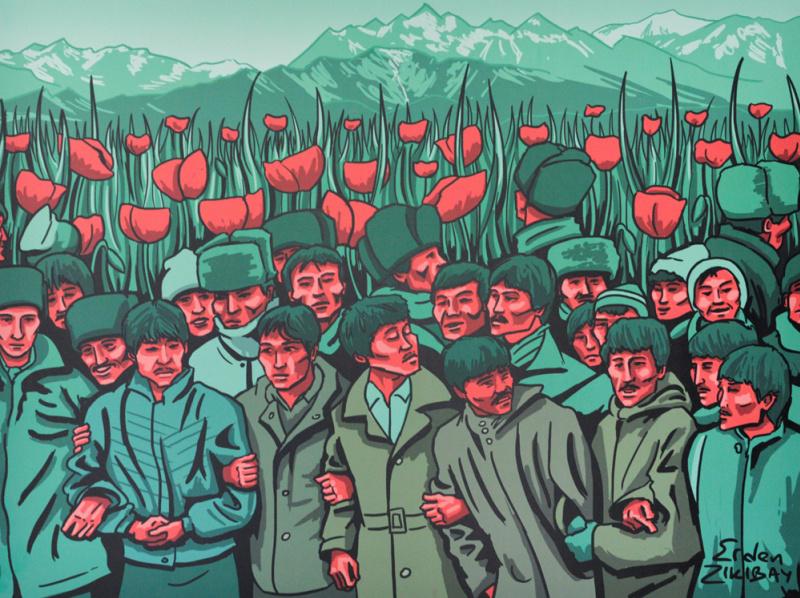
Kazakhstan's Remembrance Day for the Victims of Soviet Repression and Famine commemorates over 100,000 people who were victims of political persecution (arrested, imprisoned, or exiled) and 25,000 who were executed, most of them intellectuals, cultural leaders, and national intelligentsia labeled as "enemies of the state."
The famines of 1921-1922 and 1931-1933, just ten years apart, were catastrophic. Over 1.5 million Kazakhs (40% of the population) were starved to death, while another 600,000 fled to China, Iran, Turkey, and Afghanistan. Nomadic lifestyle and worldview was destroyed through forced sedentarization. Culture, language, and history were systematically suppressed.
One of the intellectuals murdered in 1931 was Şäkärım Qūdaiberdıūly (شەكەرئم قودايبەردئ ۇلى). Born in 1858, he was a poet, philosopher, and public intellectual.
"Рақым, Ар, Ұят табылмаса, Өлген артық дүниені былғағаннан"
"If mercy, honor, and shame are lost, better to be dead than to disgrace this world."
The 1917 Revolution
The Kazakh lands had been under Russian rule for nearly two centuries, since the Russian Empire began absorbing Kazakh territories in the 1730s. By 1847, when the last Khan of the Kazakh Khanate, Kenesary Kasymov, was killed, the conquest was complete. Seventy years later, the news of the 1917 revolution were received by the Kazakhs with fragile hopes for independence. Little did they know it would take another 74 years to achieve it…
The zeitgeist of the moment is captured in two of Shakarim Qudayberdiuly's poems: "Bostandyk tuy zharqyrap" (1) and "Bostandyk tany atty" (2)
Денесінде көп жара,
Қайраты жоқ, ес шала,
Құр жылайды барқырап.
Covered in wounds, weak and worn,
No strength, no sense to understand,
Just wailing loud across the land.
The first poem is sorrowful and cautious of the realities of external oppressors but also the internal weakness. Shakarim questions the capacity for freedom after centuries of political and economic subjugation of the Tsarist regime. Freedom has arrived, but the people, worn down by centuries of oppression, are not in a strong state, like a wounded, orphaned child, unable to act with strength or clarity.
The Dawn of Freedom
Compared to the first one, his second poem is full of hope. Through unity and honesty, justice will prevail.
Тарихта әрқашан адал жан өлмейтін.
«Ақ иіліп сынбақ жоқ» деген рас,
Нәпсі өлсе өзімшіл, бұған кім сенбейтін?
Бұл өмір таусылмас, жаңарар адамзат,
Арам ой мұтылып, зорлықшыл болар мат.
Адал етсең, енбектің жемісін жеп,
Шалқыған ел-жұртым, боларсың көңілің шат.
The righteous soul lives on, beyond its skin.
"The pure may bend," they say, "but never break,"
And once the selfish self (nafs) has died, who'd doubt what's at stake?
This life goes on, humanity renews,
Corrupted thoughts erase, and tyrants lose.
If hands are honest, you'll enjoy their yield,
And joyful hearts shall rise across my thriving field.
In June 1918, the White Army recaptured Semey. The brief months of hope after the revolution were over. Shakarim wrote: "We became slaves again, traded like sold cattle."
Even then, he held onto the belief that truth and justice would ultimately prevail.
келеді тағы өмірге мендей,
Олар мінді көреді,
қисық жерін жөндей.
Бара-бара айқындалып ақтық істің анығы,
Адасқанмен, хақиқатқа қоймақ емес сенбей.
Ақ жүрек пен таза ақыл,
Қылсаң Адал еңбек,
Бәрінен де сол мақұл –
Артқыға жол бермек.
Арсыздардың түкке тұрмай арам ойы жойылып,
Аяғында хақиқатты бұл үшеуі жеңбек.
Сен бола гөр аққа жақ,
болам десең адам,
Адал еңбек берер бақ,
бассаң соған қадам.
Айнымайтын ақ жүрек пен таза ақылды адамның
Таппасы жоқ бұл өмірде, осынымды ұқ, балам!
but do not think it ends with me.
This world will raise another in my likeness,
one who sees what has gone crooked
and dares to set it right.
In time, the justice of my cause
will stand clear to all.
Truth may wander,
but it will not be denied forever.
A heart without deceit.
A mind unclouded.
Work done in righteousness.
Hold fast to these—
no way is nobler
and no path greater
for those who follow.
The shameless schemes of corrupt men
will fade to nothing.
In the end,
these three will carry Truth to victory.
Stand beside what is righteous
if you would be worthy of the name human.
Set your feet upon the path of worthy work,
and it will lead you toward blessing.
For one whose heart knows no deceit,
whose reason remains unclouded,
whose labor is righteous and steadfast,
nothing worthy in this life lies beyond reach.
Understand this well, my child.
"This world will raise another in my likeness." These words capture Shakarim's unwavering belief that truth and justice are immortal forces. Even as he faced persecution and death, he trusted that the principles he stood for would outlive him. The world would produce another voice to carry on the struggle for righteousness. History proved him right. Though his works were suppressed for decades, they eventually resurfaced, and his philosophy of conscience continues to inspire new generations.